
Advance Care Planning: Making Your Healthcare Wishes Known
Advance Care Planning (ACP) is the process of deciding, planning, and communicating your future healthcare wishes. It ensures that your values, preferences, and choices guide your care, even if you are unable to speak for yourself. Each ACP document plays a specific role in helping your loved ones and medical team understand what matters most to you.
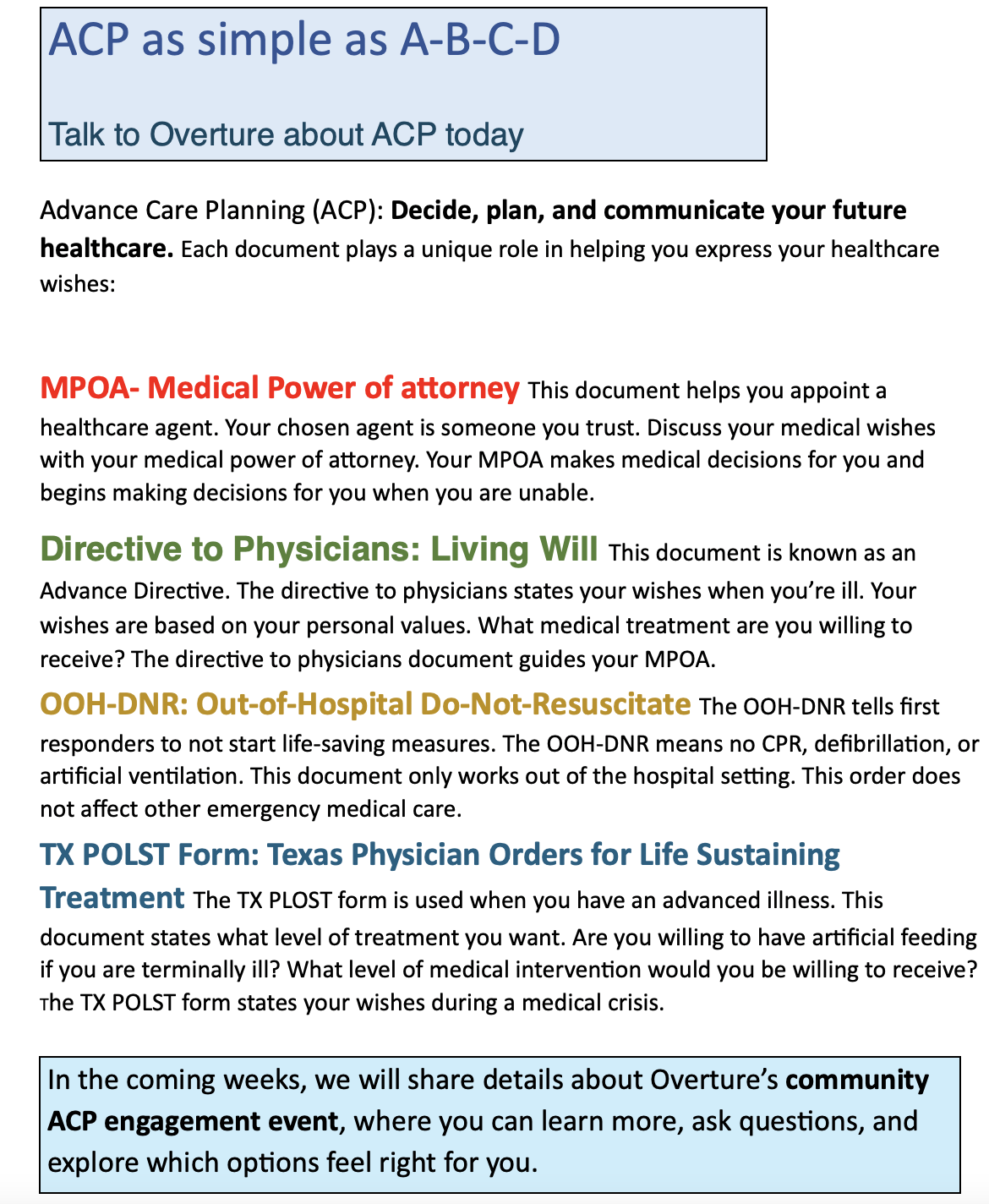
Medical Power of Attorney (MPOA)
A Medical Power of Attorney allows you to appoint a trusted person to act as your healthcare agent. This individual will make medical decisions on your behalf if you are unable to do so. It’s important to choose someone you trust and to have open conversations with them about your medical wishes, values, and preferences. Your MPOA only begins making decisions when you cannot make them yourself.
Directive to Physicians (Living Will)
Also known as an Advance Directive, the Directive to Physicians outlines the types of medical treatments you would or would not want if you become seriously ill. These decisions are based on your personal values and beliefs about quality of life. This document provides guidance to your Medical Power of Attorney and healthcare providers so your wishes are clearly understood.
Out-of-Hospital Do-Not-Resuscitate (OOH-DNR)
An Out-of-Hospital DNR informs first responders that you do not want life-saving measures such as CPR, defibrillation, or artificial ventilation started outside of a hospital setting. This order applies only in out-of-hospital situations and does not affect other emergency medical care you may receive.
Texas POLST Form
The Texas Physician Orders for Life-Sustaining Treatment (POLST) form is used for individuals with advanced or serious illness. It clearly states what level of medical treatment you want during a medical crisis, including decisions about artificial feeding and life-sustaining interventions. Unlike other planning documents, the POLST is a medical order that travels with you across care settings to ensure your wishes are followed.
Advance Care Planning gives you a voice, helps your loved ones avoid uncertainty, and ensures your care aligns with your values. Taking the time to complete these documents is one of the most meaningful steps you can take to protect your future and support the people who care about you.
If you would like guidance or have questions now, Overture Home Care is here to help you start the conversation.
blog By Dr. Kate Taylor, DNP, FNP-C, CPPS, FNAP, Overture home care clinical consultant